
Coconut Chicken & Kabocha Squash Curry
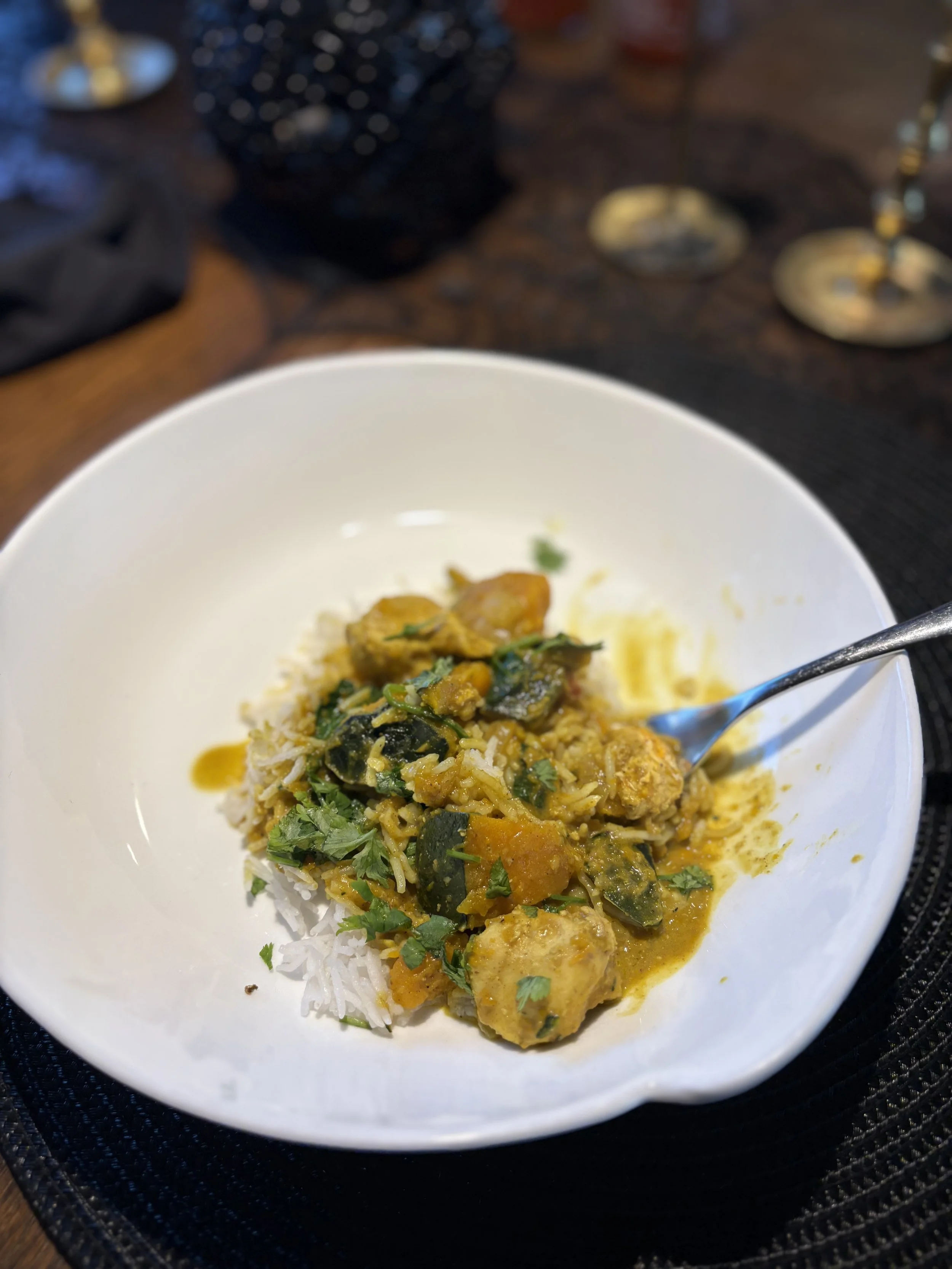
As the seasons shift and the weather cools, both Ayurveda and Traditional Chinese Medicine encourage us to turn toward warm, cooked foods that nourish digestion and support the body's natural rhythms.
In Ayurveda, autumn is considered Vata season, a time when cooler temperatures, dry air and changing weather can leave us feeling less grounded. Warm, nourishing meals, healthy fats and gently warming spices are traditionally recommended to help restore a sense of balance.
Similarly, in TCM, cooked meals and naturally sweet vegetables like squash are traditionally used to support Spleen Qi, which plays a central role in digestion and energy production.
Kabocha squash is particularly lovely this time of year. Naturally sweet and satisfying, it's relatively low in calories (so chow down) while providing fibre to support digestive health, beta-carotene for healthy skin and immune function, and vitamin C and potassium.
Prep time: 15 minutes
Cook time: 30–35 minutes
Total time: 45–50 minutes
Servings: 4
Dietary: Dairy-free, gluten-free when using certified gluten-free ingredients
Ingredients
600 g boneless, skinless chicken breast, cut into 1-inch pieces
3 cups kabocha squash, seeded and cubed
1 tbsp coconut oil or olive oil
1 medium yellow onion, diced
3 cloves garlic, minced
1 tbsp fresh ginger, grated
1½ tbsp mild curry powder
½ tsp ground turmeric
½ tsp ground cumin
1 can (400 mL) full-fat coconut milk
½ cup chicken broth
2 generous handfuls fresh spinach
1 tbsp tamari (optional)
Juice of ½ lime
Sea salt and freshly ground black pepper
Fresh cilantro, to serve
Optional for serving: Jasmine rice, toasted cashews or additional lime wedges.
Instructions
1. Prepare the squash
Wash the kabocha squash, cut it in half and scoop out the seeds. Cut into approximately 1-inch cubes.
The skin is completely edible when cooked, so there's no need to peel it. It softens beautifully as the squash simmers.
2. Brown the chicken
Heat the oil in a large, heavy-bottomed pot over medium-high heat.
Season the chicken pieces lightly with salt and pepper. Add to the pot and sear for approximately 2–3 minutes, turning occasionally, until lightly golden on the outside.
The chicken does not need to be cooked through at this stage. Remove it from the pot and set aside.
3. Build the flavour
Reduce the heat to medium.
Add the diced onion to the same pot and sauté for 3–4 minutes until softened.
Stir in the garlic and freshly grated ginger, cooking for another minute until fragrant.
4. Toast the spices
Add the curry powder, turmeric and cumin.
Stir continuously for approximately 30 seconds to release their aroma, being careful not to burn them.
5. Simmer the squash
Add the cubed kabocha squash, coconut milk, chicken broth and tamari, if using.
Stir gently to combine.
Bring to a gentle simmer, partially cover and cook for approximately 12–15 minutes, until the squash is beginning to soften but isn't completely tender.
6. Add the chicken
Return the partially cooked chicken and any accumulated juices to the pot.
Continue simmering gently for approximately 7–10 minutes, or until the squash is fork-tender and the chicken reaches an internal temperature of 165°F (74°C).
Avoid boiling vigorously, as gentle cooking helps keep the chicken breast tender.
7. Finish with greens
Stir in the fresh spinach and cook for another 1–2 minutes until wilted.
Add the lime juice and adjust the seasoning with salt and pepper.
For a thicker curry, gently mash a few pieces of cooked squash into the coconut sauce.
8. Serve
Spoon into warm bowls, either on its own or over a small serving of jasmine rice.
Finish with fresh cilantro, toasted cashews if desired, and an extra squeeze of lime.
Kitchen Notes
Make it creamier: Mash a few cubes of cooked squash directly into the sauce. This naturally thickens the curry without adding flour or cream.
Adjust the spice: The recipe is intentionally mild. Add chilli flakes or fresh chilli if you prefer more heat.
Make it lighter: Light coconut milk can be substituted, although the curry will be less rich.
Substitutions: Butternut squash or sweet potato can replace kabocha. Adjust simmering time according to the size and tenderness of the pieces.
Storage: Refrigerate leftovers in an airtight container for up to 3–4 days. Reheat thoroughly before serving.
Meal prep: The curry can be prepared ahead and reheated, making it a convenient option for busy weekdays.
Estimated Nutrition
Per serving, based on four servings, without rice or optional toppings.
Nutrient Approximate amount
Calories410 kcal
Protein38 g
Carbohydrates21 g
Fat20 g
Nutritional values are estimates and will vary depending on the coconut milk, chicken, squash and exact quantities used.
Adding ½ cup cooked jasmine rice contributes approximately 100 additional calories and 22 g carbohydrates.
Note: These recipes are AI-generated but tested by me before sharing.